

Self-regulation in the context of using learning analytics applications and tutoring systems
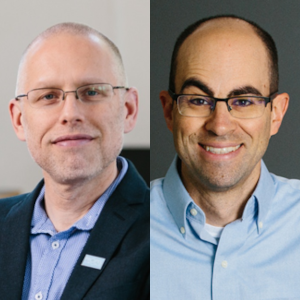
05.10.2026 | ForschungDie Fähigkeit zum selbstregulierten Lernen wird in der empirischen Bildungsforschung als wesentliche Voraussetzung für schulischen Erfolg diskutiert. Prof. Dr. Matthew L. Bernacki und Prof. Dr. Jeffrey A. Greene von der University of North Carolina at Chapel Hill (USA) befassen sich in ihrem englischsprachigen Kurzbeitrag damit, wie Learning Analytics und digitalen Lernumgebungen Lernende dabei unterstützen können, ihr Lernen eigenständig zu planen, zu beobachten und zu reflektieren.
Often, students in primary and secondary education find digital learning environments to be complex. Students learning an academic subject on a digital platform often must navigate multiple, complex resources including informational texts, illustrative videos, static and dynamic diagrams, interactive simulations, and problem sets that afford practice and feedback. These rich multimedia environments can provide powerful opportunities to learn, but that richness can also overwhelm less experienced and skillful learners (Mayer & Fiorella, 2022).
To guide students' use of these rich opportunities that modern learning technologies afford, designers often aim to provide a personalized learning experience (Bernacki et al., 2026). To do so, they use learning theories to understand information about students and data about their interactions with technology, and then they use this understanding to adapt and improve the learning experience. This might involve adapting tasks’ difficulty or providing feedback or support to the student (Bernacki & Walkington, 2026). This is where learning analytics comes in.
When students learn in digital environments, their actions leave a trace and are recorded as data. A click to open a file or their navigation from one screen to the next are logged by the environment, as are students’ written input, attempts to solve problems, and choices when interacting with dynamic learning resources. The recorded data provides the raw information that educators, researchers, and analysts who know about learning tasks and learning processes can use to understand how students are learning and how they approach different tasks. These data enable them to observe these actions and make inferences about how events reflect students’ intentions and tactics. This is learning analytics (LA).
Thus, modern educational technology does not only help students develop knowledge and skills, but also, with students’ consent, it can assess how well students learn and provide feedback on how to learn more effectively. LA can be used to create digital tools that provide students with adaptivity, feedback, and support. However, students are best positioned to benefit from educational technology and LA feedback when they have gained the knowledge, skill, and attitudes needed to take an active and thoughtful approach to their learning, an area of study called the science of learning to learn.
There are many facets to the science of learning how to learn, but a primary one involves „self-regulated learning“ (SRL), which has been described as a „superpower“ in the 21st century (Trautwein et al., 2026). Students self-regulate their learning when they actively and thoughtfully pursue academic goals, optimizing their thinking, motivations, feelings, and behaviors before, during, and after learning (Greene et al., 2024). Self-regulated learners know when and how to think carefully about a learning task, make a plan, enact and adjust high-quality learning strategies when needed, and then reflect on how well they completed the task after it is over. A vast amount of empirical evidence has shown that students who can self-regulate their learning effectively are also more successful on academic tasks, from early childhood through adulthood, and are more likely to experience success in school and beyond (Dent & Koenka, 2016; Robson et al., 2020).
SRL, and related aspects of the science of learning to learn such as self-motivation (Miele et al., 2024) are not necessarily intuitive. Primary and secondary school students must learn, or more likely be taught, how to self-regulate effectively. Research shows that this can be supported in several ways. One approach is direct instruction, for example teaching students effective learning strategies such as self-testing and elaboration (Dunlosky et al., 2013). Another is modeling: teachers can make their own thinking visible by explaining aloud how they approach a learning task and regulate their learning (Kramarski & Heaysman, 2021). Such approaches are particularly effective in classroom environments that support teacher responsiveness, student autonomy, and opportunities for students to experiment, make mistakes, and learn from them (Dignath & Veenman, 2021).
In many cases, educational technologies have been developed that provide students with tools that can not only help students self-regulate their learning, but also help them refine those skills, such as by prompting students to a make a plan or encouraging students to take elaborative rather than verbatim notes (Azevedo et al, 2022). Similar to teachers, educational technologies can teach the science of learning to learn by using direct instruction approaches to introduce learning strategies and regulation approaches, help students understand why they are effective, and then provide opportunities to recognize, practice, and apply them in real learning contexts (Hattie & Donoghue, 2016). Learners can efficiently develop their skills at their own pace and at a time of their choosing, and can immediately put new skills into practice and improve their academic performance (Bernacki et al., 2020).
The same LA approaches designers use to track progress on learning in academic subject areas can be used to detect when learners are struggling to regulate their learning (Arizmendi et al. 2022). LA can be used to trigger support for SRL, and students who receive these just-in-time training supports can improve their learning of academic content and their success in their coursework (Cogliano et al., 2022).
Building on the adaptive SRL-support tools and the decades of research on their development, researchers are now leveraging the rapidly developing capabilities of generative AI (GenAI) to design more dynamic supports to encourage SRL. These supports range from the GenAI taking the role of a coach, teaching students how to self-regulate their learning (Fütterer et al., 2026), all the way to acting as a more collaborative thought-partner, supporting students as they regulate their own learning. GenAI is the latest, and a very exciting, evolution of the possibilities for teaching and supporting SRL via educational technology and LA.
 Sofern nichts anderes angegeben wurde, stehen die
Inhalte dieser Seite unter der Lizenz
Creative Commons Namensnennung - Weitergabe unter gleichen Bedingungen 4.0 International.
Verlinkte Inhalte sind von der Lizenz unberührt.
Unter Beachtung der Lizenzbedingungen ist es gestattet,
die Inhalte der Seite zu vervielfältigen, zu verbreiten und
öffentlich zugänglich zu machen, sofern dabei
die beteiligten Autorinnen und Autoren (hier:
Matthew L. Bernacki,
Jeffrey A. Greene)
und schule-mal-digital.de genannt werden und die Verarbeitung und Weitergabe an Dritte wiederum zu diesen Bedingungen erfolgt.
Sofern nichts anderes angegeben wurde, stehen die
Inhalte dieser Seite unter der Lizenz
Creative Commons Namensnennung - Weitergabe unter gleichen Bedingungen 4.0 International.
Verlinkte Inhalte sind von der Lizenz unberührt.
Unter Beachtung der Lizenzbedingungen ist es gestattet,
die Inhalte der Seite zu vervielfältigen, zu verbreiten und
öffentlich zugänglich zu machen, sofern dabei
die beteiligten Autorinnen und Autoren (hier:
Matthew L. Bernacki,
Jeffrey A. Greene)
und schule-mal-digital.de genannt werden und die Verarbeitung und Weitergabe an Dritte wiederum zu diesen Bedingungen erfolgt.